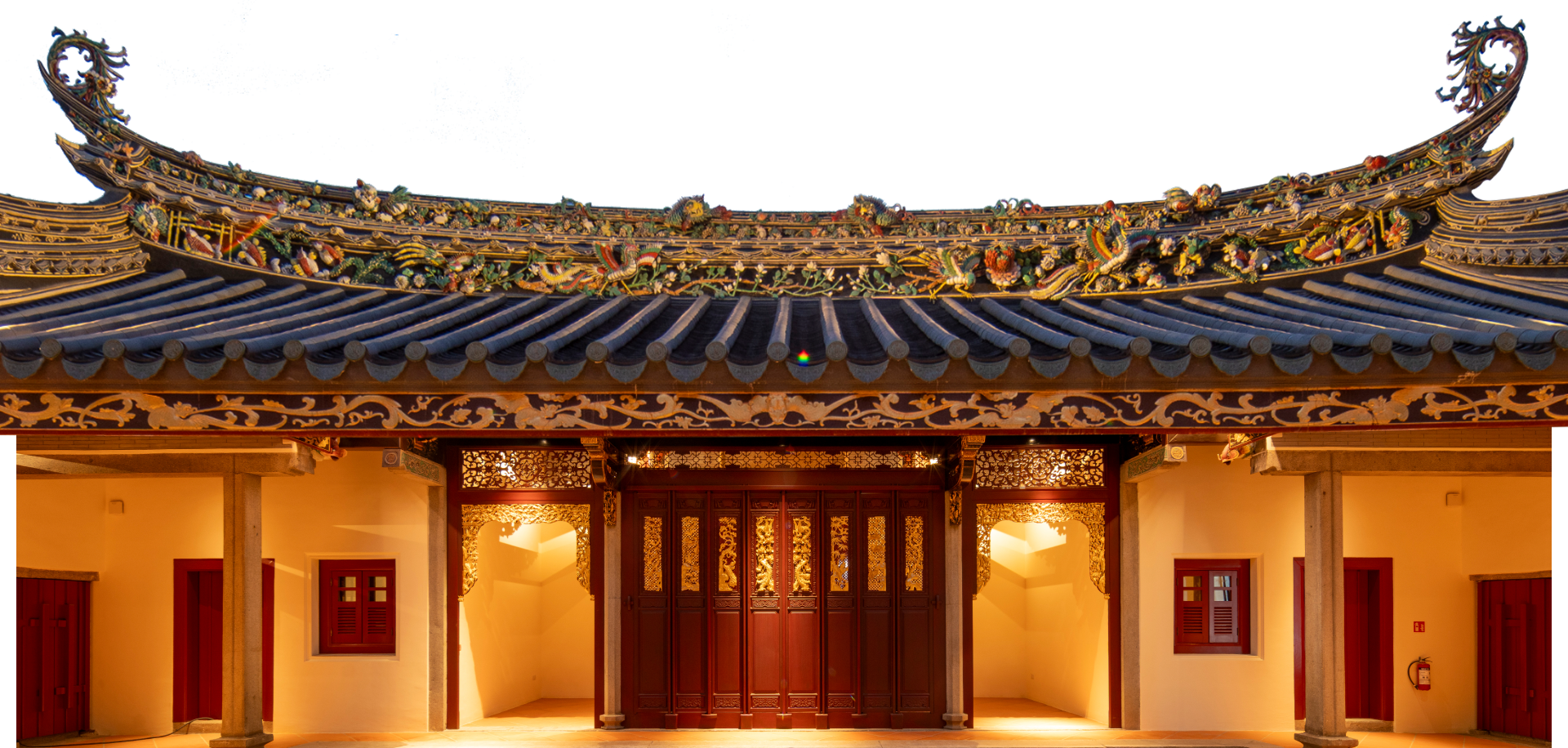
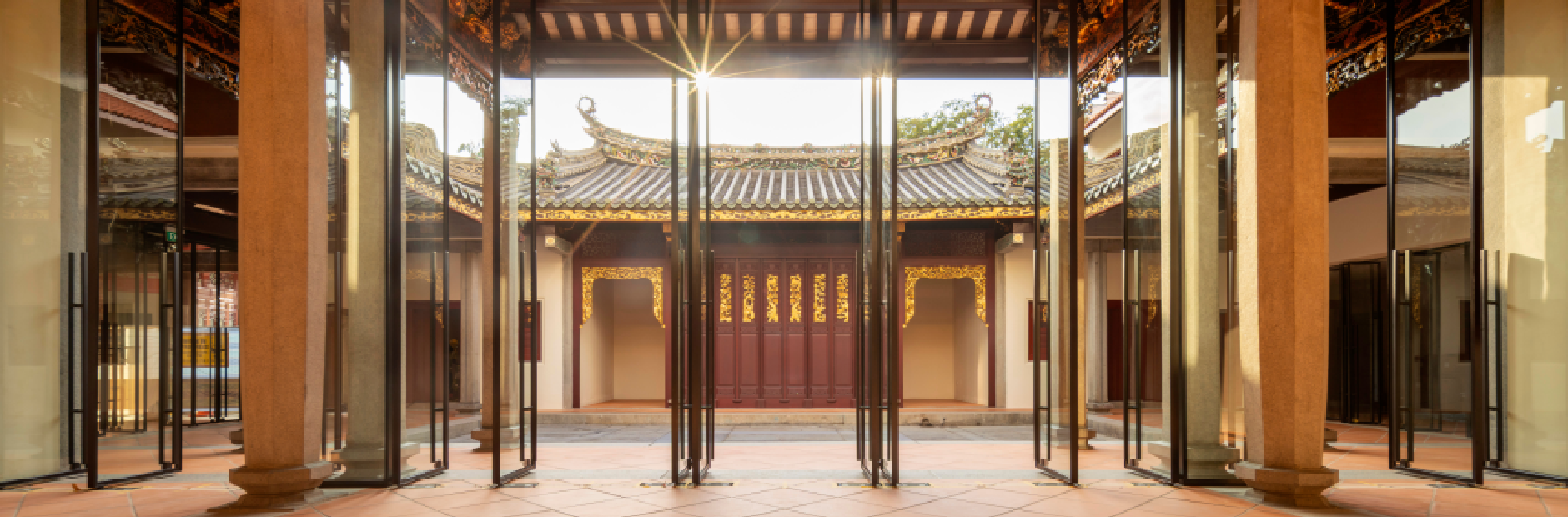
Nestled in the new green lung of Orchard Road, House of Tan Yeok Nee is a rare and prominent national monument with over 140 years of history.
In the heart of the action, yet serene and peaceful, it offers an ideal setting to enjoy a moment of tranquillity.
Proudly awarded the Singapore Urban Redevelopment Authority’s Architectural Heritage Award in 2001, this esteemed property is the sole survivor of Singapore’s "Four Grand Mansions," the others being the House of Seah Cho Seah (Son of Seah Eu Chin), the House of Tan Seng Poh, and the House of Wee Ah Hood.
Tan Yeok Nee (陈旭年, chén xù nián) was a Teochew businessman who made significant investments in gambier and pepper and was also the owner of a spirits and opium farm in Johor and Singapore.
House of Tan Yeok Nee was believed to be built between 1882 and 1885. The House was constructed by Chinese craftsmen adhering to feng shui principles, with an east-west orientation. This arrangement was believed to ward off misfortune and bring wealth to its owner. The house was strategically situated against Oxley Hill with a stream (now Stamford Canal) flowing in front and extended across the low-lying grounds of Dhoby Ghaut.
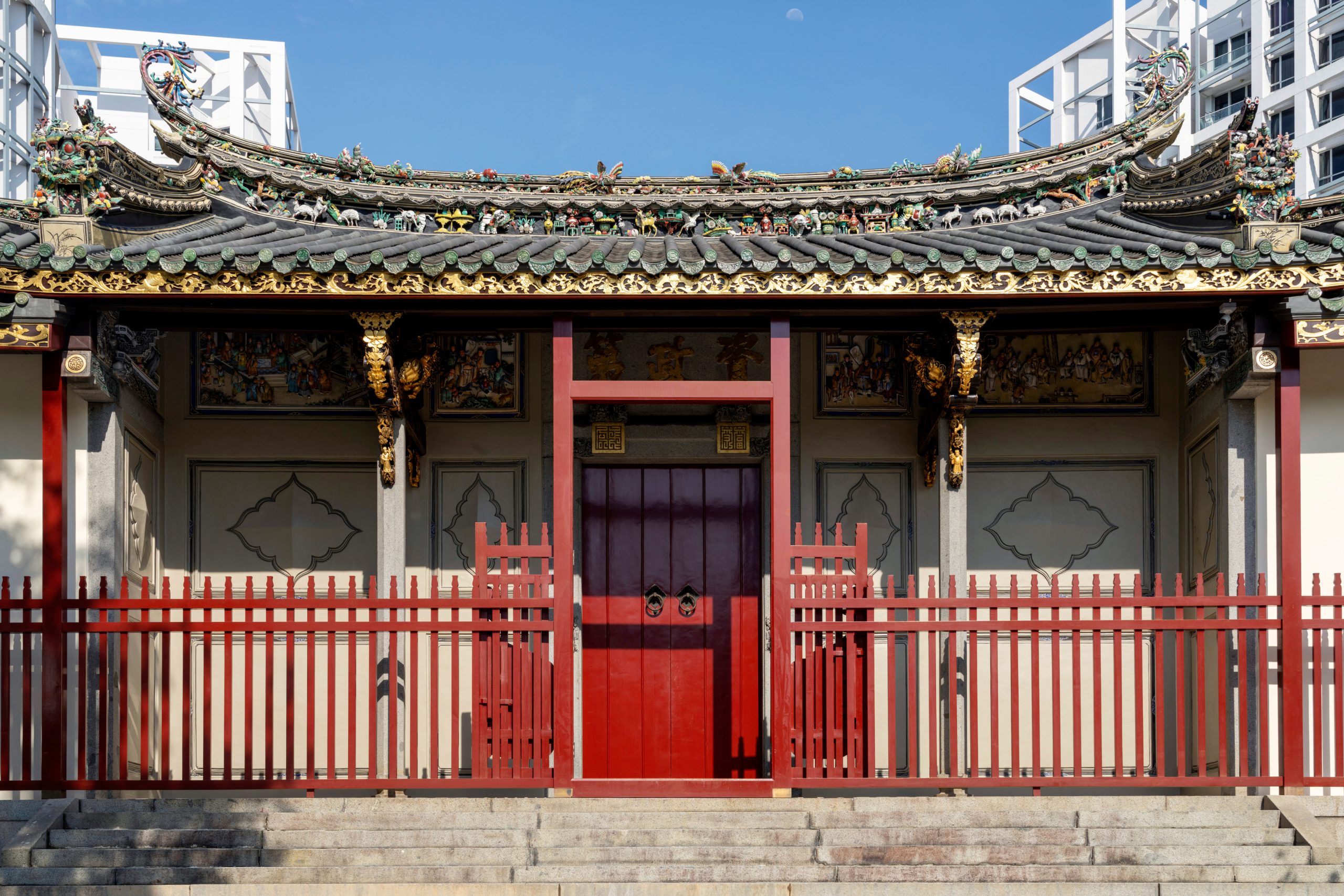
While the front of the house facing the street appears modest, with the exception of its grand doorway, the interior is expansive and spacious, featuring two courtyards, numerous rooms, and a second floor.
The design of the house follows traditional Teochew architecture as seen from the gentle curved roof ridges and other uniquely Teochew features. The inspiration for the house came from 从熙公祠 (cóng xī gōng cí), an ancestral temple that Tan Yeok Nee had begun constructing in his hometown of 金砂乡 (jīn shā xiāng) in Chaozhou.
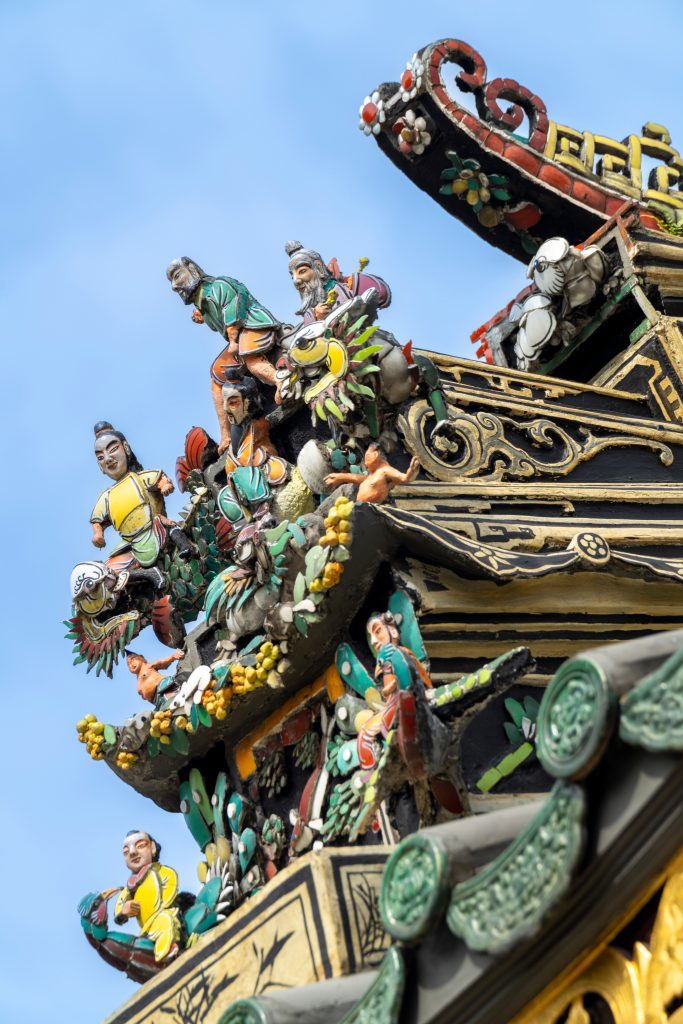
House of Tan Yeok Nee features a roof adorned with ceramic shard appliques, crafted using a unique Teochew art form (嵌瓷, qiàn cí). This technique cuts coloured ceramics into pieces, creating intricate mosaic patterns that stand out against a muted roof tile
Singapore’s proximity to the sea and its tropical monsoon climate make glazed ceramic ideal, as it helps preserve colours from being washed away by rain, ensuring the longevity of these decorative pieces.
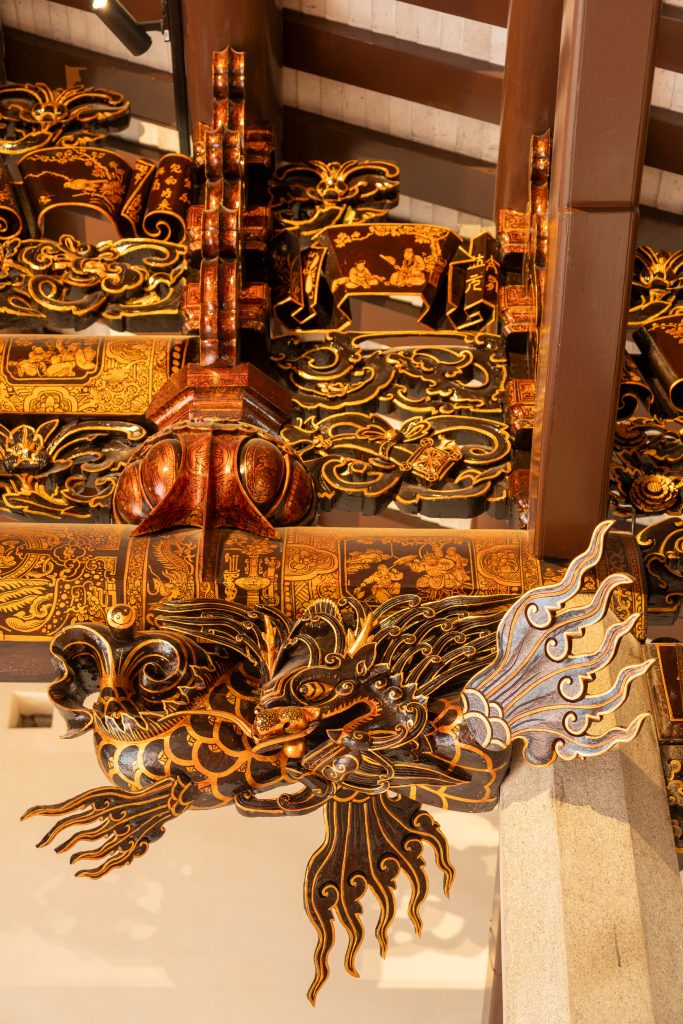
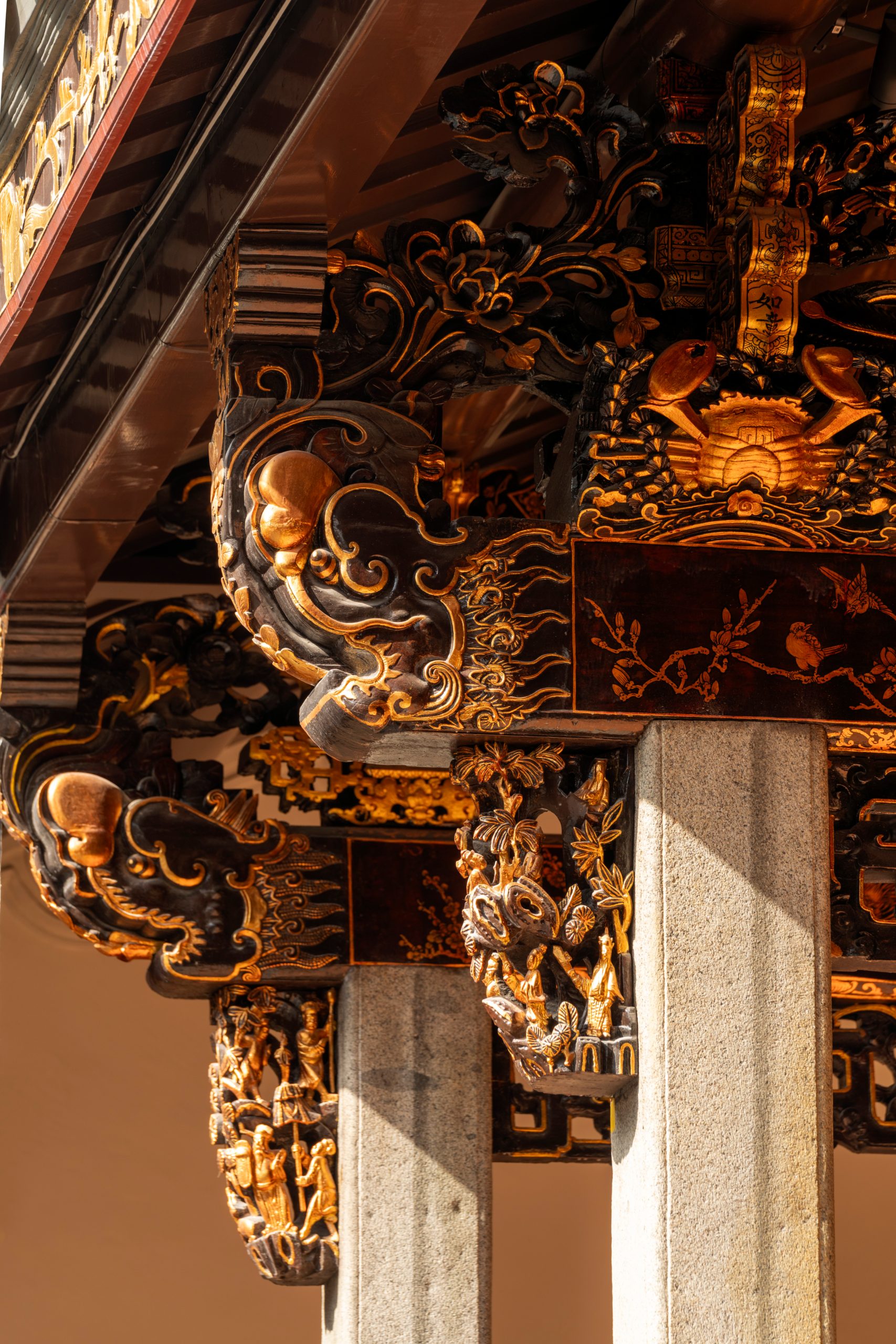
House of Tan Yeok Nee showcases fine examples of delicately crafted Teochew gilt wood carvings (潮州⾦锡⽊雕, cháo zhōu jīn xī mù diāo). These carvings highlight the refined artistry of the house, showcasing their intricate craftsmanship and auspicious motifs of prosperity and harmony.
Finished with gold leaf, these carvings adorn doors, beams, and panels, reflecting the rich heritage of Teochew tradition. These works add depth, symbolism, and cultural elegance, further enhancing the house’s architectural and historical richness.
Inside
The
House
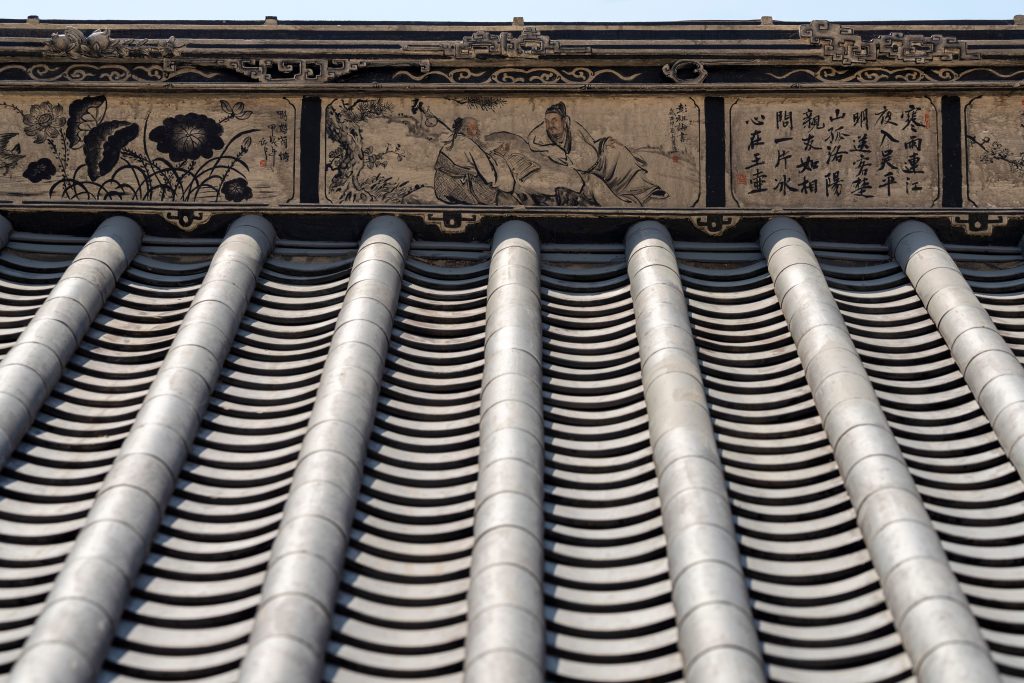
Derived from the Italian term meaning “dry painting”, the technique of secco painting involves applying paint onto fully dried plaster.
These paintings can be found along the roof ridges of the House, with poetic texts carefully inscribed within them.
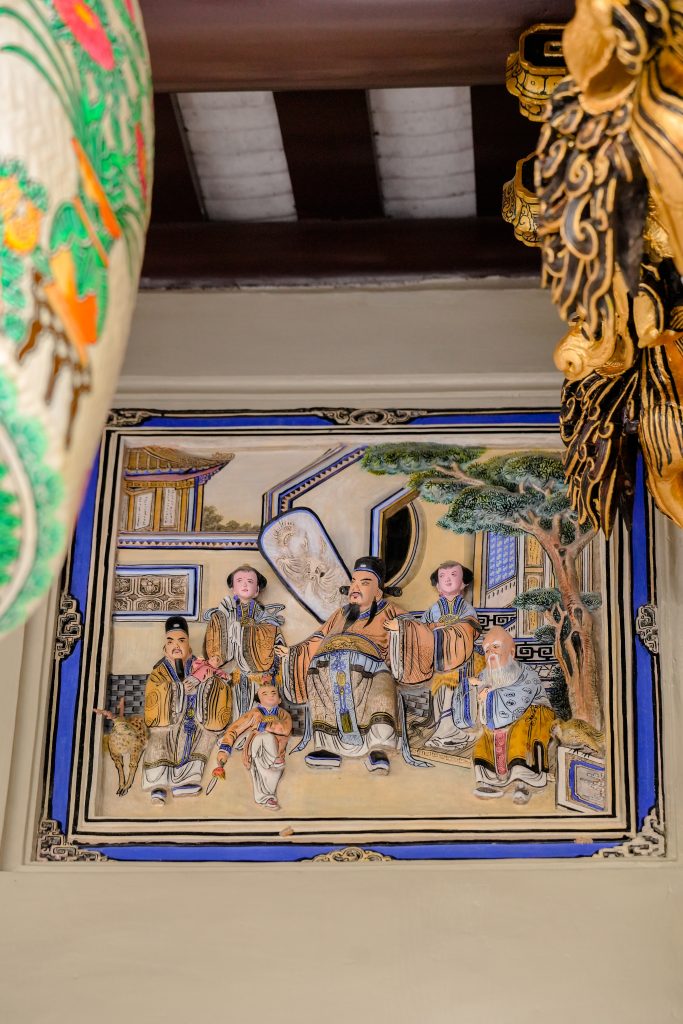
House of Tan Yeok Nee displays panels crafted from cluster molding stucco, featuring detailed mural paintings (壁画, bì huà). Each panel depicts a unique scene, including musical tableaus, Teochew folklore, and significant moments in Tan Yeok Nee’s life.
Every element of the House was produced through a traditional system of competitive contracting (对场作, duì chǎng zuò), where two distinct teams of craftsmen were engaged to compete in delivering superior work. The panels are one such example. The team whose work was deemed most exceptional was rewarded by the owner with a special (红包, hóng bāo)
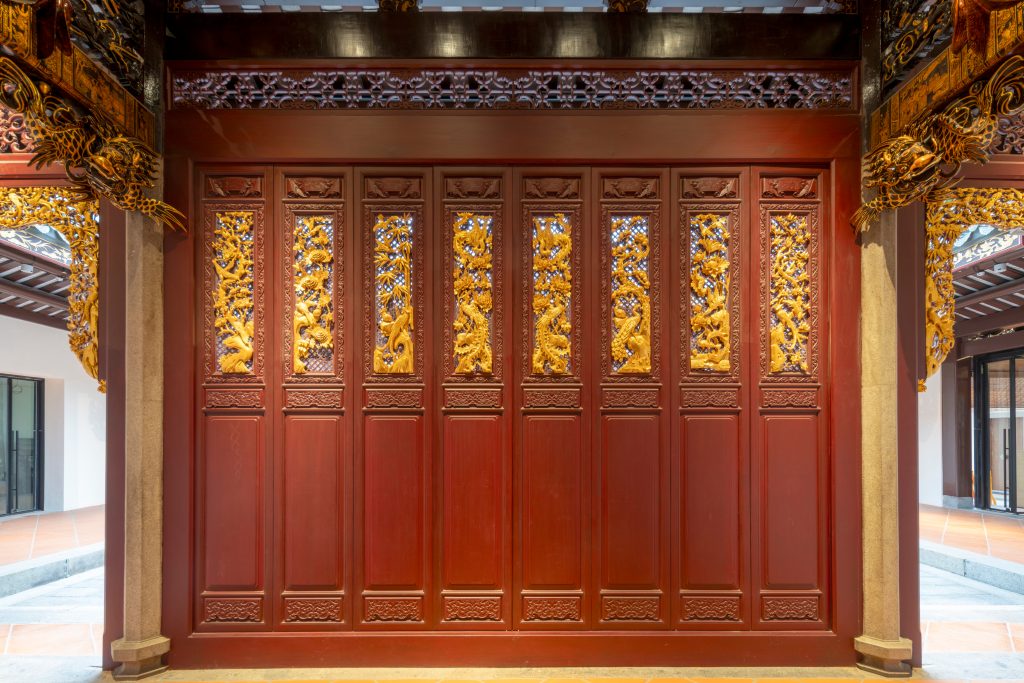
A set of partition doors (隔⻚ / 隔扇, gé yè/ gé shan) found in House of Tan Yeok Nee features ornamental filigree in an open lattice design, skillfully crafted using traditional Teochew wood carving techniques. The decorations on the doors are double-faced carvings, intended to represent various symbolic cultural motifs.
These doors were newly commissioned as part of the restoration efforts of House of Tan Yeok Nee. The gold adorning the doors presents a bright yellow hue achieved through 24k gold leaf gilding, distinguishing it from the original muted bronze filigree.


Karim Family Foundation (KFF) is a grant-making philanthropy dedicated to uplifting the disenfranchised. We seek to build a world where every individual is given equal opportunity to achieve their full potential.
The foundation began as an endeavour by Mr Bachtiar Karim and Mdm Dewi Sukwanto to formalise family efforts to give back to the causes that matter to the family. We focus our efforts on making an impact within our four core pillars: Education, Mental Health, Sports, and Arts & Culture.
The strategic acquisition of House of Tan Yeok Nee in 2022 represents the family’s commitment to cultural conservation. This venture seeks to encourage present and future generations to connect with this architectural gem and learn more about its rich historical significance.
